 |
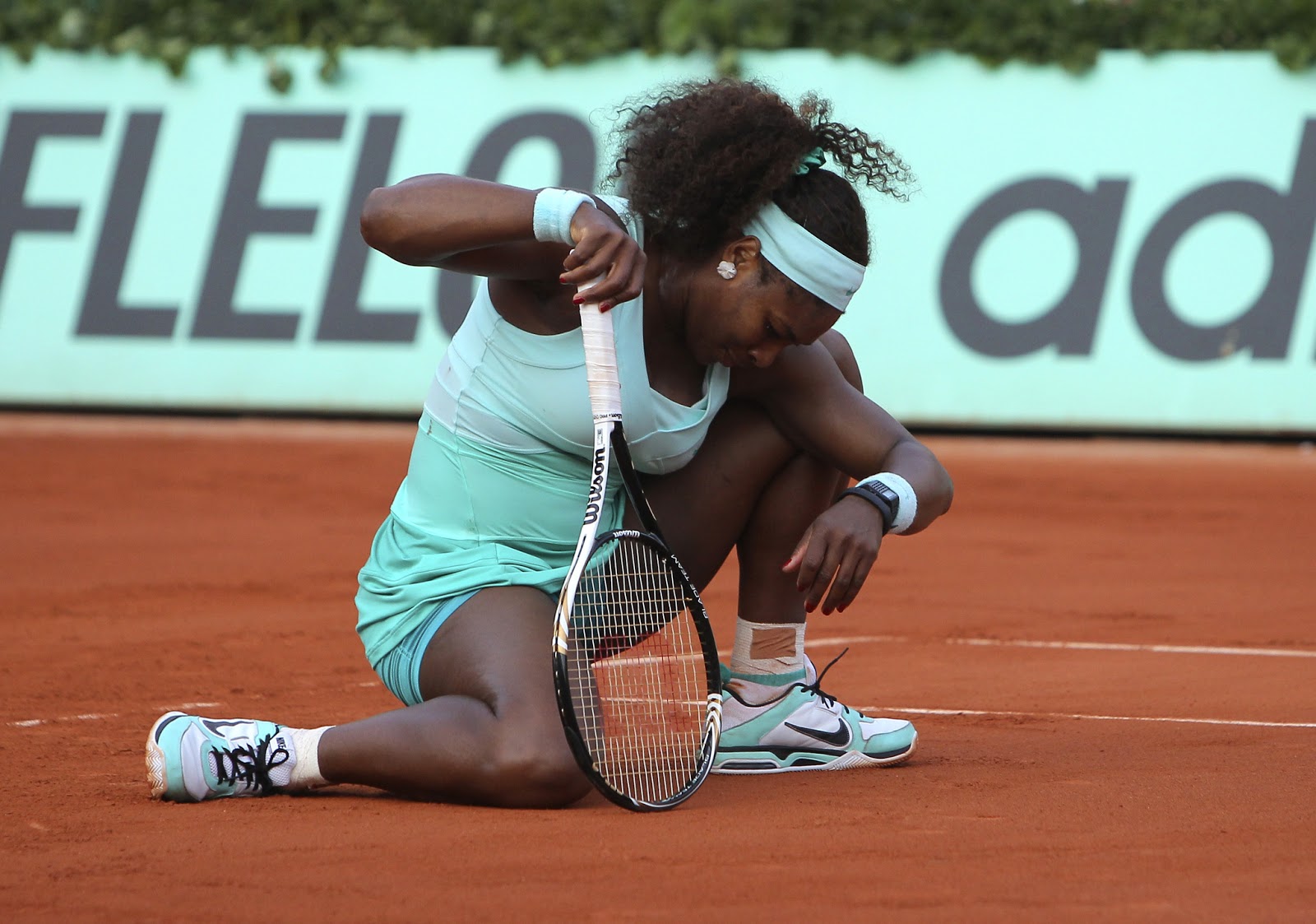
How can players on the WTA bring the Colossus, that is Serena Williams, to her knees?
|
The riddle that has confounded most professional female tennis players over the last couple of years, perhaps even decade.
Yes, there is the select few that has accomplished the feat, and in the process created shockwaves in the tennis universe. It is well documented that most of those victories over Serena seem to be due to a lackluster performance on the experienced American’s part - during most of those losses, Serena seems to have been out of sorts, off-balance and even somewhat disinterested.
So the question for the masses remains, ‘how does one beat Serena?’ - especially a fit, motivated and engaged Serena Williams.
Craig O’Shannessy, a world leader in researching and teaching tennis strategy, as well as lead analyst for the ATP WorldTour and WTA Tour, has spent some time on this riddle. He is of the firm belief that fully utilising tennis data, video analysis and the percentage plays of your opponents can make the difference between a good player and a champion. I, for one, am inclined to agree.
Although this sounds effective, tennis is still a sport where every single match is influenced by innumerable factors. One where belief possibly plays the biggest part - and possibly the one factor that determines the outcome of most matches played against Serena.
If we take just one player’s woes against Serena – and none’s woes is more famous than that of Maria Sharapova when she takes on Serena...
Craig has carved out 2 tactics for Sharapova to employ...
“[1) When Serena serves to the deuce court, virtually every first serve is aimed wide to the forehand. And virtually every second serve is up the tee to the backhand. So if Sharapova were inclined, she could position herself accordingly.
2) During the rallies, Sharapova consistently loses when she’s seduced into thinking she has an open court. (Serena not only gets to the ball in time but then has angles as options.) “When Sharapova makes Serena stop, start and reorganize,” said O’Shannessy, “she is far more successful.”]” - Craig O’Shannessy.
________
Most of the top players, men and women, when they are feeling the pressure falls back into one integral pattern of play. The pattern that they feel most comfortable with and has been successful for them 9 times out of 10 against any given player. Take Rafa, when serving at break point down... 95% of those occasions, he serves flat and hard down the T - when it get’s a weak reply, he puts it away with an off-forehand into the corner... with fairly safe margins. He will do that time and time again.
________
I think that the trick is to watch those matches of Serena where she was put into those incredibly high pressure situations, and try to identify her pressure play patterns. It doesn’t matter who she plays against, if it is a close match or close sets... it is inevitable that there will be a pattern of play that will emerge to the keen observers. Just take a 4-all, 30-all point... both when Serena is serving and when she is returning. When she is break points down on her serve, when she has been broken and her opponent has a point or even a few, to consolidate a break.
If opponents, coaches or analysts can identify Serena’s Pressure Play pattern, they can start working on a solution.
Only once her pattern/s on the big points has been identified, can opponents find counter patterns.
Best advise is to start with, 2 plays to counter that pattern, one defensive and one offensive? Can they turn their defensive pattern to offence?
Keep it simple! After all, the grand-master Leonardo da Vinci said: “Simplicity is the ultimate sophistication.”
Step 1 - Start with those two counter patterns, hit the practice court and mind-numbingly drill that pattern into the player that it becomes one of their instinctive plays.
Step 2 - (and this is where most trip themselves up) employ them ceaselessly, don’t give up, keep executing the patterns, time and time and time again. Even if you start out losing points. Keep executing.
Step 3 - Fearlessness win’s matches... not to be confused with recklessness. Be fearless in implementing your identified plays. If your preparation is good, your research is solid, it will pay off. Not to mention, with a bit of luck... and what’s that old adage: “Fortune favours the Brave!”
Yet, it is one thing to have a solid tactic, but it is quite another to constantly and consistently employ it effectively.
BE BRAVE!
I would say it is reasonable to bet, that any offensive pattern that turns out to be successful against Serena, has a reasonable chance of being effective against most players on the tour. So make it a steady part of the arsenal, if possible, drill so hard on it, till it becomes one of their own ingrained pressure play patterns.
There's no guarantee that it will work, I can’t even be said definitively, that this hasn’t been done before, but it’s worth a shot. Especially on those days when opponents can get into the Serena service games.
This of course is all good and well - in theory. It even sounds straight forward, but even the very best strategies and opponents can still falter, most notably when Serena is serving great. When Serena serves great, the rest of her game is elevated - her footwork, court-positioning and movement just all falls into place. When that happens, well, she was just too good!
As a tennis-lover and competitive player, I find that the most exciting matches to watch are those where the underdog finds a way to create the upset. With certain exceptions, off course. *Smile* And everyone, without exception, is the underdog when facing Serena Williams.
Craig O’Shannessy has a wealth of tennis knowledge and one of my favourite tennis writers out there. If you love tennis and the strategic aspect of tennis, he is worth following.
Visit his website
or folliow him on Twitter
@BrainGameTennis


